


MONOLOGUING

The theatrical monologue, as a short and condensed form of expression, gives voice to individuals, experiences, and stories that often remain on the margins. Focusing on personal confession, reflection, and memory, the monologue opens a direct dialogue with the audience, shedding light on the timeless human experience, social and historical circumstances, and the female perspective on the world. The Monologuing 2026 section of the Golfο Festival presents contemporary and classical works that highlight the power of a single individual to tell an entire world's story.



The Lost Diary of A.G. (A Fictional Tale)

Taking Manos Lambrakis’ The Lost Diary of A.V. (a fiction) as our point of departure, we approach Aliki Vougiouklaki as part of our collective memory. Her voice is shared among many women’s voices, transforming individual remembrance into a collective experience. We do not seek to recreate or imitate the icon, but to evoke her through memory. Thirty years after her passing, Aliki returns to the stage as a living cultural trace and a shared site of memory.


Juana la Loca / El Tiempo Inmóvil

In Yanna Roilou’s Juana la Loca / El Tiempo Inmóvil, Joanna of Castile is trapped in a time that has ceased to move. In the solitude of confinement, her voice confronts faith, power, punishment and submission. Behind the historical figure emerges a woman claiming the right to question the truth imposed upon her and to seek her own. A voice that, from within the darkness, strives to rediscover the light and to reclaim love in the face of the power of fear.


MEDUSA

In Dimitris Dimitriadis’ Medusa, the mythical figure returns after centuries of oblivion, seeking to reclaim her gaze, her name and her power. Medusa refuses to remain a harmless work of art, a petrified remnant of myth to be viewed from a safe distance. She turns her gaze upon us and demands to become dangerous, active and present once again. The ancient myth thus becomes a relentless confrontation with time, memory, power and the very gaze of the spectator.


Giorgides

In Stella Voskiridou’s Giorgides, memory is not a return to the past; it is an open dialogue with the present and the future. Through the encounter of two generations, the experience of Cyprus in 1974 is passed from the person who lived through it to the one who seeks to understand and narrate it. Personal testimony meets fiction, raising a persistent question: what remains when the last bearers of living memory begin to disappear? Between voice, silence, song and absence, the play resists oblivion. For perhaps the greatest challenge is not simply to remember, but to endure memory with our eyes open.


The Caressed One

In Vassilis Boutos’s monologue The Caressed One, Lais returns from the realm of memory to tell her own story. Behind the body that was desired, judged, and turned into an object, a woman emerges, seeking her own name and her own voice. Moving through love, violence, desire, and loss, the monologue shifts our gaze from the myth to the person. Lais does not ask to be remembered for her beauty, but for what she lived, endured, and left behind as memory.


Matricide

In Yannis Palamiotis’ Matricide, the relationship between mother and son becomes the site of a painful confrontation between love and rejection, dependence and the need for freedom. The mother is not merely a figure within the family; she also becomes the gaze of a society that judges difference and struggles to accept it. Through this conflict emerges the difficult journey towards recognising and shaping one’s own identity. “Matricide” thus becomes a symbolic act of separation: the need to break away from what one loves yet is simultaneously confined by, in order to become fully oneself.


Sara(h) – A comedy

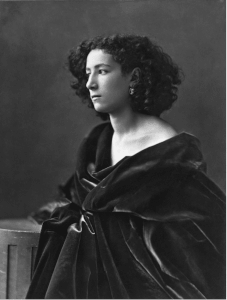
In Manos Lambrakis’ Sara(h) – A comedy, the legendary Sarah Bernhardt returns to the stage to confront theatre itself, the roles that defined her, and the myth she created around herself. Moving between rehearsal and confession, provocation and parody, the great actress engages in dialogue with Proust, Racine, Wilde, and the heroines she once embodied, claiming even their memories as her own. The ageing and amputated body, the voice that refuses to fall silent, and the ceaseless transformation of theatrical identity come together in a comedy that is fierce, irreverent, and profoundly theatrical. Behind the grandeur and sarcasm emerges a fundamental question: where does the human being end and the role begin?


Javascript must be enabled to continue!